It’s Not Just About Saving Money. It’s About Fitting Your Lifestyle.
When I first started working with GJM Energy, I assumed the conversations would revolve around panels, batteries, inverters and payback periods. After all, that’s what…

Why you can trust our content
We know that the solar industry is full of misinformation, but we only use reliable sources, including:




At a glance
When I first started working with GJM Energy, I assumed the conversations would revolve around panels, batteries, inverters and payback periods. After all, that’s what most people associate with solar. The technology is impressive and the savings can be significant, so it seemed obvious that those would dominate every discussion.
I couldn’t have been more wrong.
The thing that’s surprised me most over the last few months is how little Gavin actually talks about equipment during the early stages of meeting a homeowner. Instead, he asks questions. Lots of them. Not because he’s following a script, but because he’s trying to understand something that no quotation could ever tell him.
How does this family actually live?
It sounds like a simple question, but the more I’ve watched him work, the more I’ve realised it’s probably the most important one of all.
Does somebody work from home during the day? Are the children about to leave for university? Is an electric vehicle likely to appear on the driveway next year? Do they use most of their electricity in the evenings, or is the house empty until six o’clock every night?
Those conversations shape every recommendation that follows, and they’re the reason I’ve stopped thinking about solar as a product and started thinking about it as something much more personal.
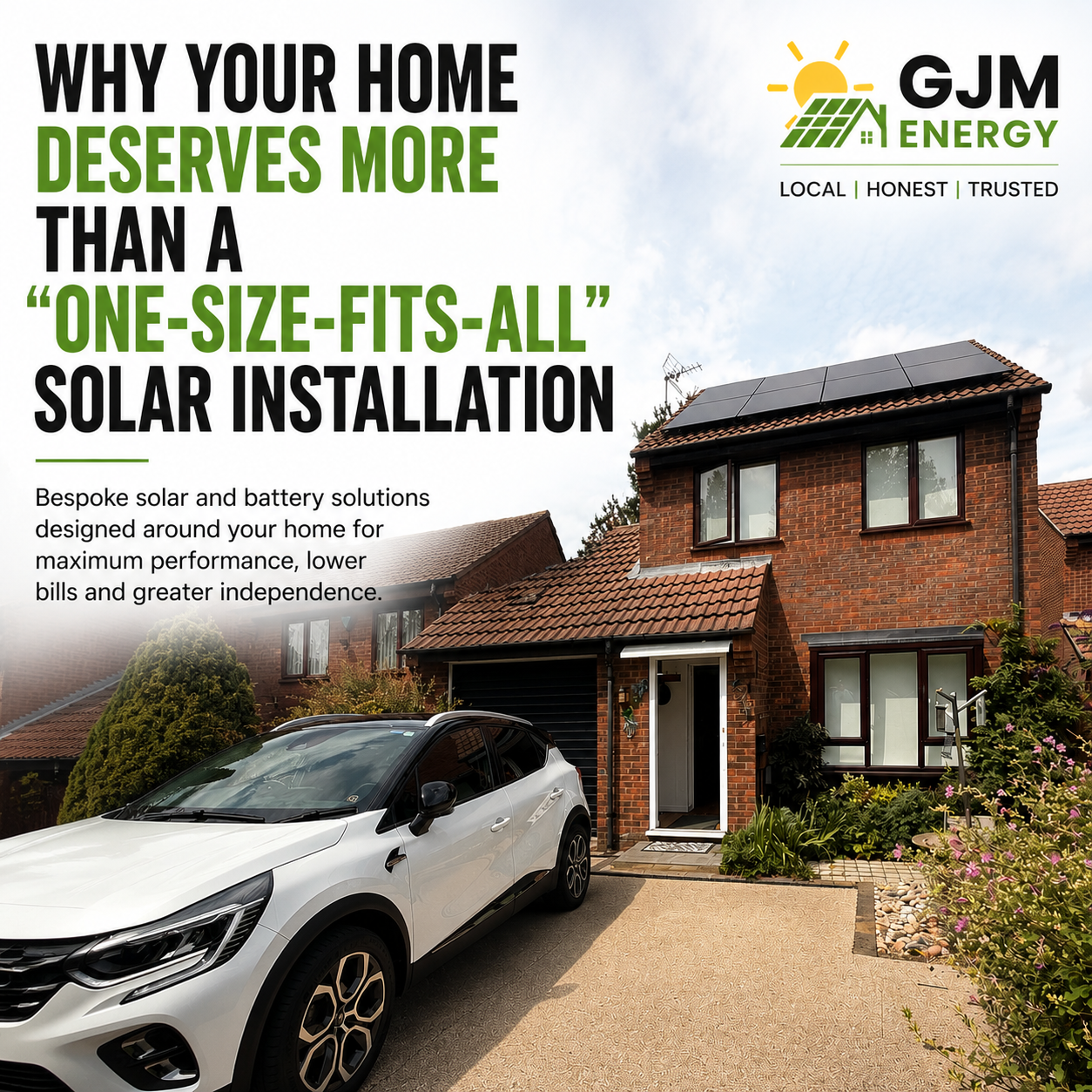
Two houses next door to each other can look almost identical from the outside, yet the families living inside can have completely different lifestyles. One might be home all day. The other might only switch the kettle on after work. One could be planning to install a hot tub. The other might be trying to reduce their bills before retirement.
The roof hasn’t changed.
The people have.
And that’s why the right system often changes too.
I’ve also noticed something else.
Gavin has incredibly high standards, and they’re not reserved for the finished installation. They show themselves in dozens of little moments that most customers will never see. He’ll question a cable route because it could look tidier. He’ll spend longer designing a system if he thinks it can be improved. He’ll challenge his own team, not because anything is wrong, but because he knows “good” is rarely the same as “the best we can do.”
At first, I thought he was just being particular.
Now I understand that’s simply the culture of the business.
When the person leading the company refuses to accept mediocre, that attitude quietly spreads through the whole team. By the time the installation is finished, nobody has been asked to do a good job. They’ve been expected to.
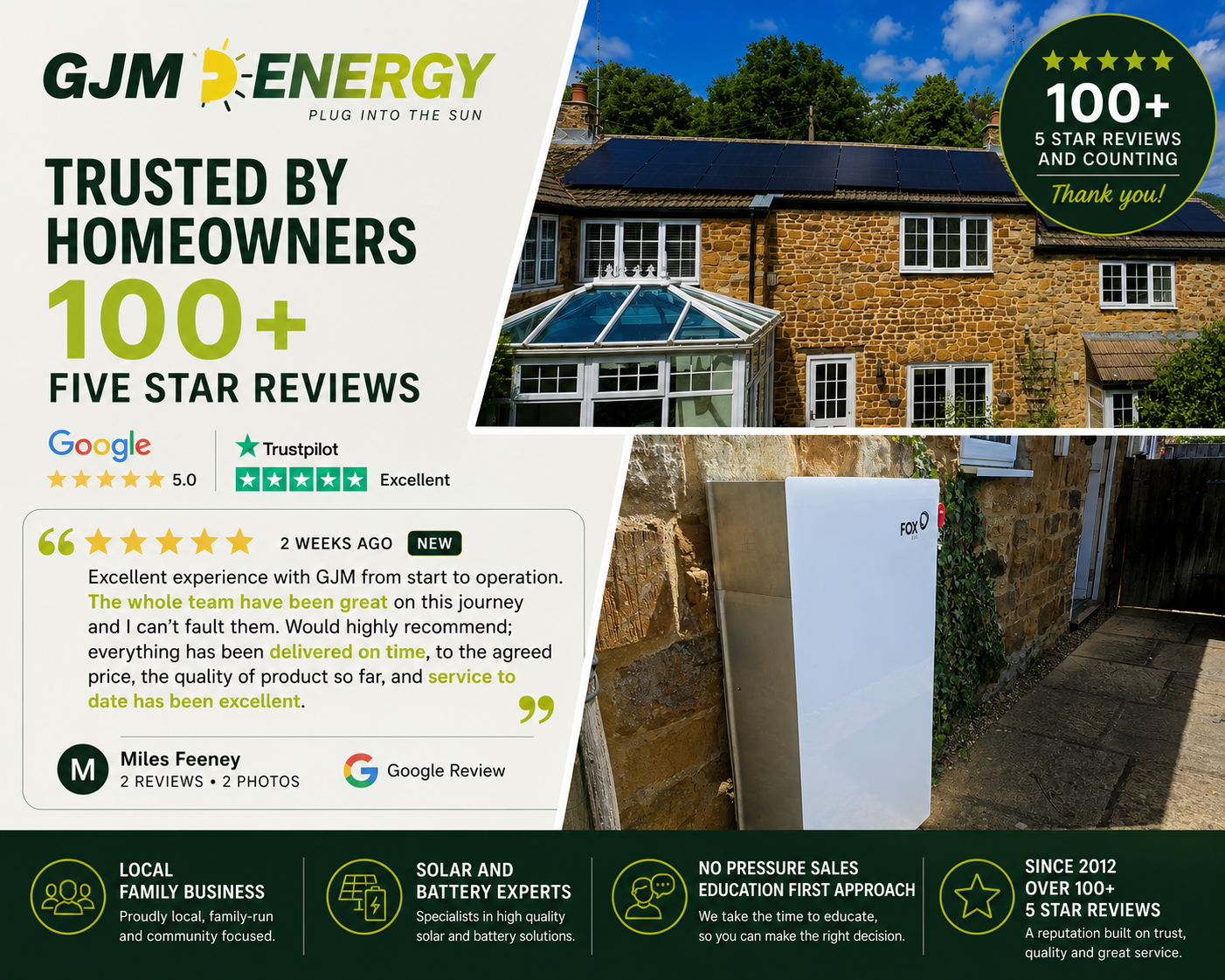
Perhaps that’s why, when I read through GJM’s reviews, people rarely talk about technical specifications. They remember the experience. They remember that somebody listened. They remember that everything was explained clearly. They remember feeling looked after.
The panels are almost secondary.
As somebody who’s worked in marketing for most of my career, I’ve learnt that businesses don’t build reputations through slogans. They build them through habits. The little things they do every day when nobody is watching eventually become the stories customers tell their friends.
That’s exactly what I see happening at GJM Energy.
Yes, solar can save you money, and yes, it can reduce your reliance on the grid. Those are important reasons to consider it. But if there’s one thing I’ve learnt from working alongside Gavin, it’s that the best solar installation isn’t the one with the biggest specification. It’s the one that’s designed around the way you and your family actually live.
If you’re just beginning to explore solar, I’d encourage you not to start with the question, “How much can I save?”
Start with, “What’s the right solution for my home?”
The answer might surprise you.
If you’d like to see how GJM approaches that process, spend a little time on our website. We’ve filled it with real customer stories, educational videos, genuine case studies and honest advice to help you make an informed decision before speaking to any installer.
Related articles



What type of property do you have?

Detached House

Semi Detached House

Terraced House

Flat or Apartment
Bungalow
At a glance
When I first started working with GJM Energy, I assumed the conversations would revolve around panels, batteries, inverters and payback periods. After all, that’s what most people associate with solar. The technology is impressive and the savings can be significant, so it seemed obvious that those would dominate every discussion.
I couldn’t have been more wrong.
The thing that’s surprised me most over the last few months is how little Gavin actually talks about equipment during the early stages of meeting a homeowner. Instead, he asks questions. Lots of them. Not because he’s following a script, but because he’s trying to understand something that no quotation could ever tell him.
How does this family actually live?
It sounds like a simple question, but the more I’ve watched him work, the more I’ve realised it’s probably the most important one of all.
Does somebody work from home during the day? Are the children about to leave for university? Is an electric vehicle likely to appear on the driveway next year? Do they use most of their electricity in the evenings, or is the house empty until six o’clock every night?
Those conversations shape every recommendation that follows, and they’re the reason I’ve stopped thinking about solar as a product and started thinking about it as something much more personal.
Two houses next door to each other can look almost identical from the outside, yet the families living inside can have completely different lifestyles. One might be home all day. The other might only switch the kettle on after work. One could be planning to install a hot tub. The other might be trying to reduce their bills before retirement.
The roof hasn’t changed.
The people have.
And that’s why the right system often changes too.
I’ve also noticed something else.
Gavin has incredibly high standards, and they’re not reserved for the finished installation. They show themselves in dozens of little moments that most customers will never see. He’ll question a cable route because it could look tidier. He’ll spend longer designing a system if he thinks it can be improved. He’ll challenge his own team, not because anything is wrong, but because he knows “good” is rarely the same as “the best we can do.”
At first, I thought he was just being particular.
Now I understand that’s simply the culture of the business.
When the person leading the company refuses to accept mediocre, that attitude quietly spreads through the whole team. By the time the installation is finished, nobody has been asked to do a good job. They’ve been expected to.
Perhaps that’s why, when I read through GJM’s reviews, people rarely talk about technical specifications. They remember the experience. They remember that somebody listened. They remember that everything was explained clearly. They remember feeling looked after.
The panels are almost secondary.
As somebody who’s worked in marketing for most of my career, I’ve learnt that businesses don’t build reputations through slogans. They build them through habits. The little things they do every day when nobody is watching eventually become the stories customers tell their friends.
That’s exactly what I see happening at GJM Energy.
Yes, solar can save you money, and yes, it can reduce your reliance on the grid. Those are important reasons to consider it. But if there’s one thing I’ve learnt from working alongside Gavin, it’s that the best solar installation isn’t the one with the biggest specification. It’s the one that’s designed around the way you and your family actually live.
If you’re just beginning to explore solar, I’d encourage you not to start with the question, “How much can I save?”
Start with, “What’s the right solution for my home?”
The answer might surprise you.
If you’d like to see how GJM approaches that process, spend a little time on our website. We’ve filled it with real customer stories, educational videos, genuine case studies and honest advice to help you make an informed decision before speaking to any installer.
Related articles
What type of property do you have?
Detached House
Semi Detached House
Terraced House
Flat or Apartment
Bungalow